
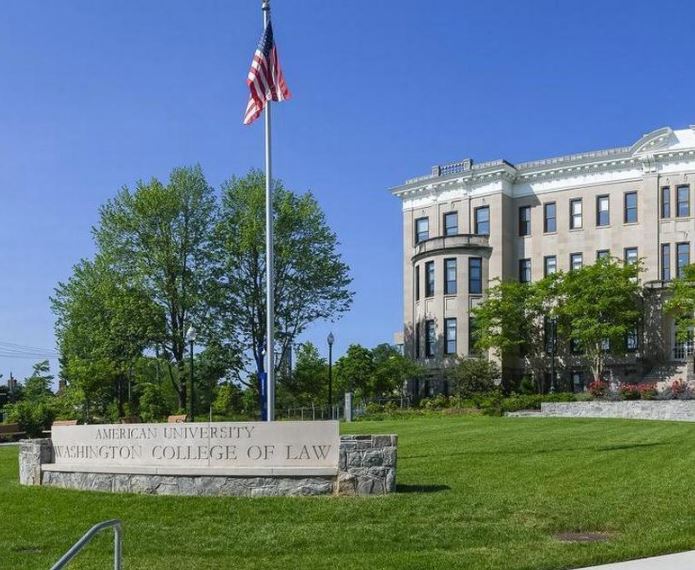
KellDann founding partners Scott M. Kelly and Kirk A. Sigmon brought their video game law expertise to American University Washington College of Law, teaching the course “Video Game and Immersive Entertainment Law” this month. They served as adjunct professors alongside fellow KellDann founder Ross Dannenberg, who established the course and has taught it for nearly a decade.
Scott brought deep experience in video game intellectual property, backed by his computer science background, prior service as a U.S. Patent and Trademark Office examiner, and his service as chair of the American Bar Association’s Digital Games and New Media Committee. Scott is also one of the authors of the ABA’s Legal Guide to Video Game Development, which is edited by Ross.
Kirk drew on his published scholarship on video game copyright, video game preservation, and patent protection, including difficult questions at the intersection of games, technology and ownership. As a Thomas Edison fellow at George Mason University, Kirk authored Nerds v. Nintendo: Video Game Decompilations vs. Rights-Holder Interests. Kirk also recently authored a chapter on video game patents in the Research Handbook on Interactive Entertainment Law.
Together, Kelly and Sigmon have worked together for years on various video game IP issues for major video game companies. Together, they prepared research, published in the Interactive Entertainment Law Review, on esports streaming and copyright. Both also spoke at Digital Dragons 2026 in Kraków, addressing AI and other legal challenges facing game studios.
This year’s course also welcomed a distinguished lineup of guest speakers: Laura Marston and David Bender of ZeniMax Media / Bethesda, Terri Perkins of Funcom, Professor Andy Phelps (formerly an American University professor and now a Professor of Digital Media in the School of Literature, Media & Communication at the Georgia Institute of Technology), and Bijou Mgbojikwe of the Entertainment Software Association. The guests brought firsthand industry experience and academic insight to the classroom (and made the students very jealous of their day-to-day jobs).
The course examined legal issues with direct consequences for developers and players, including game clones, modding, patents, streaming rights, and loot boxes. Students also explored augmented and virtual reality, examining how the distinctive technology and business of games change the legal analysis.